
C & T Newsletters
February 2026
SDNY Court Ruling Confirms Public AI Conversations Are Not Privileged
Takeaway: Use your lawyer when wanting to generate confidential AI work, as then the proprietary information could be considered “Attorney Work Product.”

A recent ruling by Judge Jed S. Rakoff in the Southern District of New York confirmed that documents generated using public AI tools, such as Anthropic’s Claude, are not protected by attorney-client privilege or the work-product doctrine. The court emphasized that AI cannot form a privileged relationship because it is not a licensed attorney, and users cannot reasonably expect confidentiality since public AI providers can retain and use the data. Additionally, the AI explicitly disclaims providing legal advice, and materials generated independently of counsel do not qualify as work product. This decision highlights that feeding privileged information into public AI platforms may waive confidentiality, and simply transferring AI-generated outputs to a lawyer does not retroactively make them privileged. Enterprise AI tools with contractual confidentiality protections may be treated differently, but the law on that remains unsettled.
Mahomes and Kelce Face Trademark Lawsuit Over 1587 Brand Dispute
Takeaway: Even when businesses operate in different industries, using the same trademark on merchandise can create a risk of consumer confusion and lead to significant legal disputes.
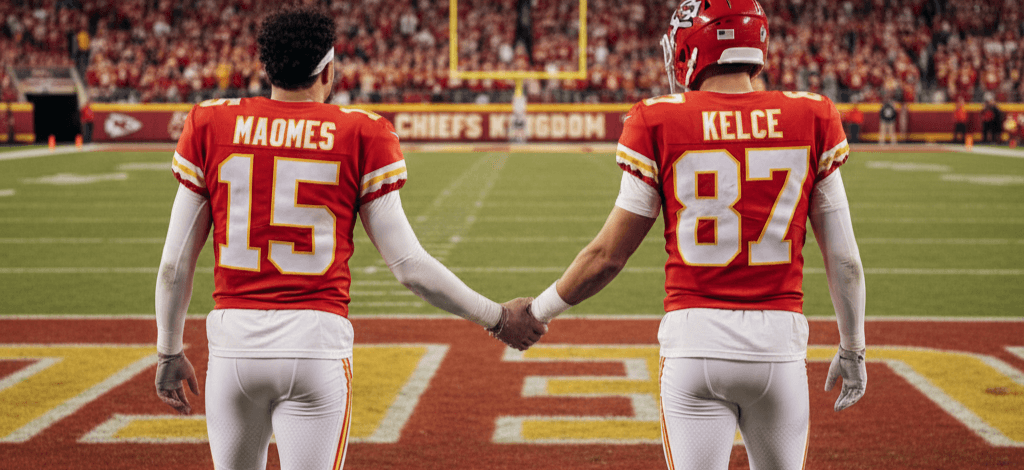
A sneaker company, 1587 Sneakers, has filed a federal trademark infringement lawsuit against Patrick Mahomes and Travis Kelce, alleging their steakhouse venture, 1587 Prime, improperly uses the “1587” mark. The number combines the players’ jersey numbers and is used for the restaurant and related merchandise. The sneaker company claims it began selling shoes under the 1587 name before the restaurant opened and argues that the steakhouse’s sale of apparel and branded goods could cause consumer confusion. Both sides have filed trademark applications in different categories, and the dispute will likely center on whether customers are likely to believe the brands are connected.
Federal Circuit Vacates Infringement Ruling Over Claim Construction Error
Takeaway: Concerning software inventions, the U.S. patent statute under section 101 concerning patent eligibility requires something more than just customizing data to be patentable.

In Case No. 24-1669, decided February 9, 2026, the appellate court reviewed a dispute involving intellectual property rights and the proper interpretation of the asserted patent claims. The court examined the district court’s claim construction and its rulings on infringement and related defenses, focusing on the intrinsic record, including the patent specification and prosecution history.
The court determined that the lower court erred in key aspects of its claim interpretation, concluding that certain disputed terms were construed too broadly or inconsistently with the patent’s written description. Under the correct construction, the record did not support the prior infringement finding, and further proceedings were required.
The court also addressed procedural challenges, including evidentiary rulings and the sufficiency of the evidence presented at trial. Although some arguments were rejected, the claim construction error was found to be material and outcome determinative, resulting in vacatur in part and remand for reconsideration under the clarified standard.
Ninth Circuit Rules Tracy Anderson Workout DVDs Are Not Copyrightable
Takeaway: The court confirmed that methods and systems designed for health or fitness, even if choreographed, are not eligible for copyright protection.

The Ninth Circuit has affirmed a lower court ruling that invalidated the copyrights on celebrity trainer Tracy Anderson’s “Tracy Anderson Method” workout routines in 19 DVDs, finding them to be unprotectable methods rather than choreographic works. The court held that, like the yoga poses in the 2015 Bikram’s Yoga College of India v. Evolation Yoga case, Anderson’s routines are designed to improve health and physical results, making them functional processes rather than expressive works eligible for copyright protection.
Although the routines involve dance movements from ballet, jazz, hip-hop, and modern dance, the court emphasized that their primary purpose is functional, aimed at calorie burning and fitness, and not perceived by users as expressive choreography. The ruling ends Anderson’s copyright claims against her former employee Megan Roup and The Sculpt Society LLC, while noting it does not affect her contract claim, which was resolved confidentially. The decision reinforces that fitness routines and other functional physical sequences cannot be copyrighted, although it only applies to the specific 19 DVDs at issue.
Trump Seeks Trademarks for Airports in Unprecedented Personal Branding Move
Takeaway: Trump’s airport trademark filings break with tradition by treating presidentially named airports as a commercial brand rather than an honorary designation.

President Donald Trump, through his company DTTM Operations LLC, has filed trademark applications for variations of his name covering airport operations, lounges, luggage, and related merchandise, including proposed names like “President Donald J. Trump International Airport.” This move marks a departure from historical precedent, as U.S. airports named after presidents such as John F. Kennedy Airport or Clinton National typically do not have trademarks, and naming is usually honorary rather than commercial.
Intellectual property attorneys note that Trump’s filings align with his long-standing strategy of monetizing and protecting his personal brand across a wide range of products and services. The applications are intent-to-use, meaning the marks are not yet in commercial use, and the process could take years before the trademarks are officially applied. While unusual for a sitting president, the filings reflect Trump’s pattern of leveraging his name for commercial purposes even in areas traditionally not associated with private trademarks.
Supreme Court to Review Patent Liability for Skinny-Label Generic Drugs
Takeaway: The Supreme Court will decide whether generic-drug makers can face patent liability for passive statements when using “skinny-labels,” a ruling that could reshape incentives for generic competition. Skinny labels are FDA-approved generic drug labels that carve out patented uses of a brand-name drug, allowing the generic to be sold only for non-patented approved uses.

Hikma Pharmaceuticals has asked the U.S. Supreme Court to overturn a Federal Circuit ruling allowing Amarin Pharma’s patent infringement suit over a “skinny label” generic version of the heart medication Vascepa to proceed. Skinny labels, permitted under Section viii of the Hatch-Waxman Act, let generic-drug makers sell drugs for non-patented uses while excluding patented uses from the label. Hikma argues that the Federal Circuit improperly found that its press releases and website statements could induce infringement, even though Hikma took no active steps to encourage doctors to prescribe the patented use. The company warns that the ruling threatens the economic viability of the skinny-label pathway by exposing generics to significant potential damages simply for routine communications, and it contends that inducement of infringement requires active steps, not passive statements. The Supreme Court is set to hear arguments on April 29, and the case represents a broader challenge over how generic-drug makers can navigate Section viii without risking liability.
Silicon Valley Engineers Indicted for Stealing Trade Secrets and Accessing Them in Iran
Takeaway: Insider trade secret theft, even when conducted across international borders, carries severe legal consequences and poses significant risks to national security and proprietary technology.
Three Silicon Valley engineers, sisters Samaneh and Soroor Ghandali and Samaneh’s husband Mohammadjavad Khosravi, have been charged with conspiring to steal trade secrets from Google and other major tech companies and sending the confidential information to personal devices that they accessed while in Iran. Prosecutors allege the trio copied sensitive information on processor security and cryptography, used personal devices and third-party platforms to store it, and took steps to conceal their actions, including signing false affidavits, deleting files, and photographing screens instead of directly copying documents.
The defendants continued accessing stolen materials even after leaving their employment, and federal authorities seized electronic devices containing company secrets during a March 2024 search. If convicted, the defendants face up to ten years in prison for each count of trade secret theft and up to twenty years for obstruction of justice. The case highlights the FBI’s focus on protecting Silicon Valley technology and national security from internal threats.
Supreme Court Leaves Peloton Bike+ Trademark Win Intact
Takeaway: The U.S. Supreme Court let stand a Ninth Circuit ruling in favor of Peloton, declining to revive World Champ Tech LLC’s reverse-confusion trademark claims over “Bike+,” signaling that courts may resolve likelihood-of-confusion disputes at summary judgment when the record does not support consumer confusion, especially where the mark is descriptive, such as “bike” for bicycles and the mere adding of a plus sign.

The U.S. Supreme Court declined to review a Ninth Circuit decision rejecting trademark infringement claims brought by World Champ Tech LLC against Peloton, leaving in place a ruling that found no likelihood of confusion over the use of the name “Bike+.” The justices did not explain their decision.
WCT sued in 2021, alleging that Peloton’s promotion of its Bike+ product infringed WCT’s registered “Bike+” mark, which it has used for a cycling app since 2014. Framing the case as one of reverse confusion, WCT argued that Peloton’s market dominance overwhelmed its brand, causing consumers to believe WCT’s app was affiliated with Peloton. It pointed to search results and app store listings where its mark appeared alongside Peloton advertising.
Both the district court and the Ninth Circuit ruled in Peloton’s favor at the summary judgment stage. The courts concluded there was no likelihood of confusion, finding WCT’s mark descriptive and determining that Peloton’s use of its house brand alongside “Bike+” reduced any similarity between the marks.
In its petition for certiorari, WCT argued that courts improperly weighed multifactor likelihood-of-confusion tests at summary judgment, contending that factual disputes should be resolved by juries rather than judges. It claimed inconsistent approaches among circuits lead to unpredictable results. By declining review, the Supreme Court left the Ninth Circuit’s approach intact.
Cislo & Thomas LLP Spotlight
Cislo & Thomas Preparing for INTA 2026 in London!
Cislo & Thomas LLP is proud to be exhibiting at the 148th Annual INTA Conference in London this year from May 2, 2026 through May 6, 2026 and holding meetings at our Booth No. 1740 at the INTA Conference Center. If you plan to attend, please come by and see us!
Previous Newsletters